
Skip to content
Skip to content
First order? Enjoy 10% off with code
Applications of Dehydrated Vegetable Powders
sourcing 6 min read

Applications of Dehydrated Vegetable Powders

By Rare Locals B2B Team
HomeJournalsourcing
Where tomato, beetroot, carrot, onion, garlic and leafy powders earn their place: colour, flavour, nutrition and clean-label formulation.

A vegetable powder is the whole vegetable minus its water, milled fine. Nothing is extracted, so the powder carries colour, flavour, fibre and minerals together — which is exactly why formulators reach for it.

Natural colour

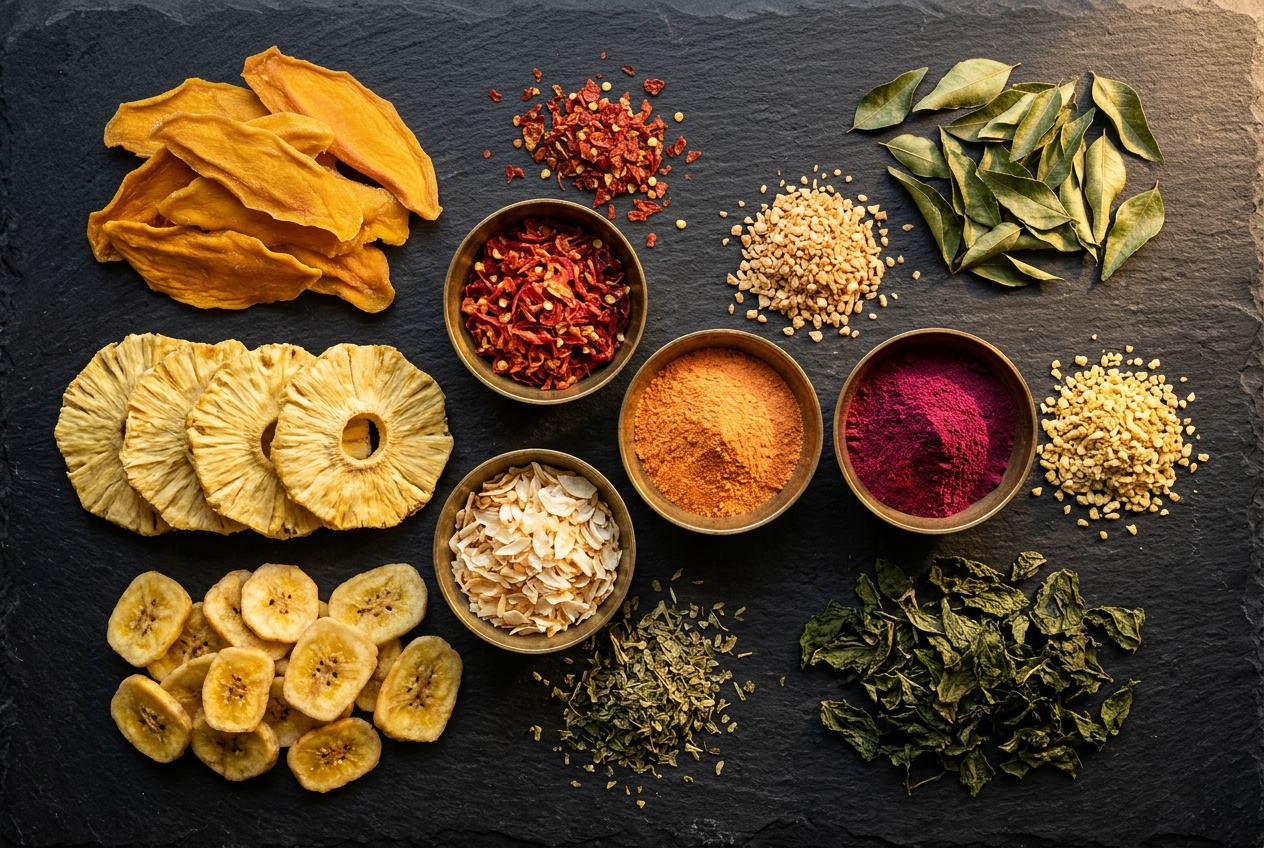
Beetroot powder gives pink-to-crimson in icings, pasta, yoghurt and confectionery; carrot gives orange; spinach-type greens give green. Unlike liquid colours they add no water to the system.

Savoury flavour bases

Tomato, onion and garlic powders are the backbone of seasonings, dips, dressings and instant soups. Low-temperature drying keeps onion sweet instead of acrid and tomato bright instead of brown.

Bakery and snacks

Powders blend evenly into dry premixes — crackers, breads, extruded snacks, savoury biscuits — where fresh vegetables would wreck the dough’s water balance.

Nutrition and wellness

Beetroot and leafy powders are familiar in shakes and functional blends. Declare them honestly: they are concentrated vegetables, not isolated actives, and claims should stay within what the nutrition panel supports.

Formulation tips

  • Match particle size to the application — fine for beverages, coarser for visible flecks.
  • Keep powders dry and sealed; most are hygroscopic.
  • Ask whether an anti-caking agent is added. Ours are single-ingredient unless your specification says otherwise.

See fruit and vegetable powders for the range we mill and how to request samples.

Request a bulk quotation →

#vegetable powder#applications#formulation
Share
    Free Shipping on Orders above ₹500 • Ships from Bengaluru • Rare in Nature. Local at Heart.
    RARE LOCALS
    The Journal

    Applications of Dehydrated Vegetable Powders

    Where tomato, beetroot, carrot, onion, garlic and leafy powders earn their place: colour, flavour, nutrition and clean-label formulation.

    A vegetable powder is the whole vegetable minus its water, milled fine. Nothing is extracted, so the powder carries colour, flavour, fibre and minerals together — which is exactly why formulators reach for it.

    Natural colour

    Beetroot powder gives pink-to-crimson in icings, pasta, yoghurt and confectionery; carrot gives orange; spinach-type greens give green. Unlike liquid colours they add no water to the system.

    Savoury flavour bases

    Tomato, onion and garlic powders are the backbone of seasonings, dips, dressings and instant soups. Low-temperature drying keeps onion sweet instead of acrid and tomato bright instead of brown.

    Bakery and snacks

    Powders blend evenly into dry premixes — crackers, breads, extruded snacks, savoury biscuits — where fresh vegetables would wreck the dough’s water balance.

    Nutrition and wellness

    Beetroot and leafy powders are familiar in shakes and functional blends. Declare them honestly: they are concentrated vegetables, not isolated actives, and claims should stay within what the nutrition panel supports.

    Formulation tips

    • Match particle size to the application — fine for beverages, coarser for visible flecks.
    • Keep powders dry and sealed; most are hygroscopic.
    • Ask whether an anti-caking agent is added. Ours are single-ingredient unless your specification says otherwise.

    See fruit and vegetable powders for the range we mill and how to request samples.

    Request a bulk quotation →