
Skip to content
Skip to content
First order? Enjoy 10% off with code
Dehydrated Fruits Wholesale Supply in India: A Buyer’s Guide
sourcing 6 min read

Dehydrated Fruits Wholesale Supply in India: A Buyer’s Guide

By Rare Locals B2B Team
HomeJournalsourcing
What to check before you buy dehydrated mango, pineapple, apple or banana in bulk — cut, moisture, additives, packaging and documentation.

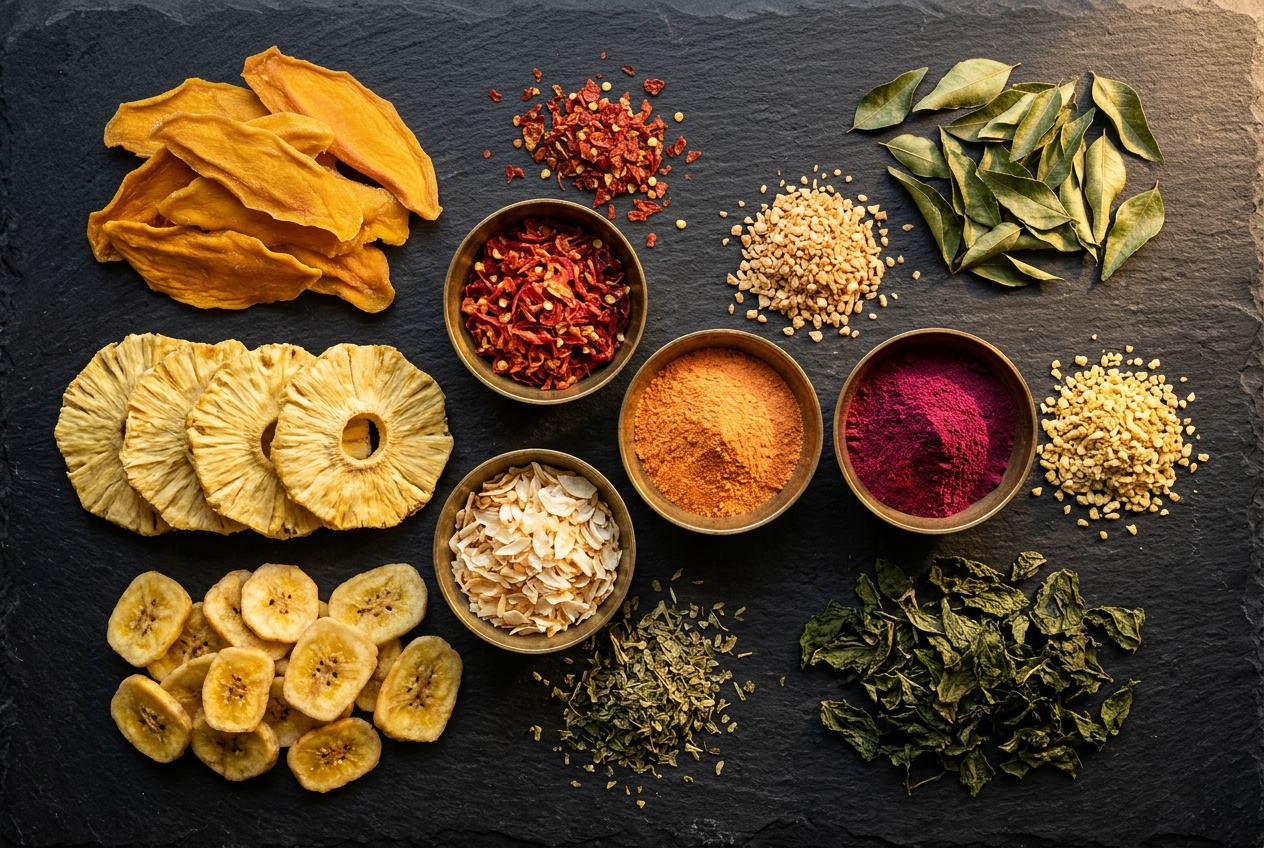
Dehydrated fruit has moved from the trail-mix aisle into mainstream manufacturing: cereal inclusions, bakery fillings, confectionery, beverage powders and premium gifting. If you are sourcing it in bulk for the first time, the price per kilo is the least useful number on the quotation. Here is what actually determines whether a lot works in your product.

1. Fresh-weight yield and what you are paying for

Roughly 8–10 kg of fresh mango becomes 1 kg of dried slices. A supplier’s price therefore reflects the fruit variety and season far more than the drying step. Ask which variety and harvest window the lot comes from — it explains both colour and sweetness.

2. Cut and format

Slices and rings suit snack packs and gifting; dices (6–10 mm) are standard for cereal and bakery inclusions; pieces and crumbles for toppings; powders for beverages and premixes. Specify the cut up front — re-cutting dried fruit creates fines and waste.

3. Additives

Much of the imported dried fruit on the market is sugar-infused or sulphited to hold colour. Rare Locals dries fruit only — no added sugar, sulphite, oil or preservative — which matters for clean-label products and for anyone declaring “no added sugar”. Confirm the ingredient declaration in writing.

4. Moisture and water activity

Final moisture decides texture and shelf life. Chewy snack slices sit higher than crisp inclusions destined for cereal. Agree a target and ask for it on the batch certificate.

5. Packaging and traceability

For bulk, food-grade liners in cartons or bags; for retail, nitrogen-flushed pouches slow oxidation and keep colour. Every pack should carry a batch and date code that traces back to the raw-material lot.

How we supply

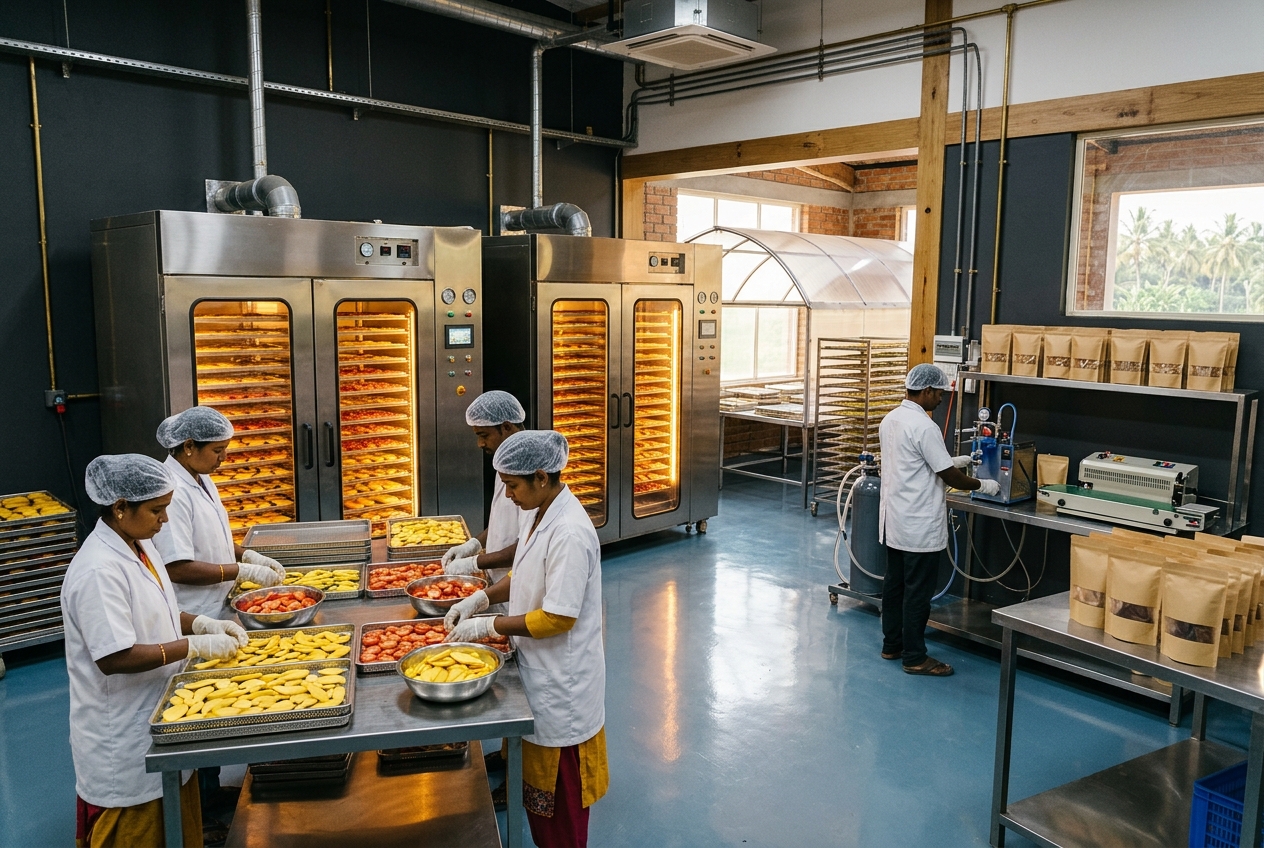
Our dehydration plant dries sliced fruit at 40–50 °C and packs slices, dices or powders to specification. Retail packs of dehydrated mango, pineapple, apple and banana are on the shop; bulk formats are quoted per enquiry — we do not publish fixed MOQs because the right quantity depends on your cut and pack format.
Request a bulk quotation →

#dehydrated fruits#wholesale#sourcing
Share
    Free Shipping on Orders above ₹500 • Ships from Bengaluru • Rare in Nature. Local at Heart.
    RARE LOCALS
    The Journal

    Dehydrated Fruits Wholesale Supply in India: A Buyer’s Guide

    What to check before you buy dehydrated mango, pineapple, apple or banana in bulk — cut, moisture, additives, packaging and documentation.

    Dehydrated fruit has moved from the trail-mix aisle into mainstream manufacturing: cereal inclusions, bakery fillings, confectionery, beverage powders and premium gifting. If you are sourcing it in bulk for the first time, the price per kilo is the least useful number on the quotation. Here is what actually determines whether a lot works in your product.

    1. Fresh-weight yield and what you are paying for

    Roughly 8–10 kg of fresh mango becomes 1 kg of dried slices. A supplier’s price therefore reflects the fruit variety and season far more than the drying step. Ask which variety and harvest window the lot comes from — it explains both colour and sweetness.

    2. Cut and format

    Slices and rings suit snack packs and gifting; dices (6–10 mm) are standard for cereal and bakery inclusions; pieces and crumbles for toppings; powders for beverages and premixes. Specify the cut up front — re-cutting dried fruit creates fines and waste.

    3. Additives

    Much of the imported dried fruit on the market is sugar-infused or sulphited to hold colour. Rare Locals dries fruit only — no added sugar, sulphite, oil or preservative — which matters for clean-label products and for anyone declaring “no added sugar”. Confirm the ingredient declaration in writing.

    4. Moisture and water activity

    Final moisture decides texture and shelf life. Chewy snack slices sit higher than crisp inclusions destined for cereal. Agree a target and ask for it on the batch certificate.

    5. Packaging and traceability

    For bulk, food-grade liners in cartons or bags; for retail, nitrogen-flushed pouches slow oxidation and keep colour. Every pack should carry a batch and date code that traces back to the raw-material lot.

    How we supply

    Our dehydration plant dries sliced fruit at 40–50 °C and packs slices, dices or powders to specification. Retail packs of dehydrated mango, pineapple, apple and banana are on the shop; bulk formats are quoted per enquiry — we do not publish fixed MOQs because the right quantity depends on your cut and pack format.

    Request a bulk quotation →