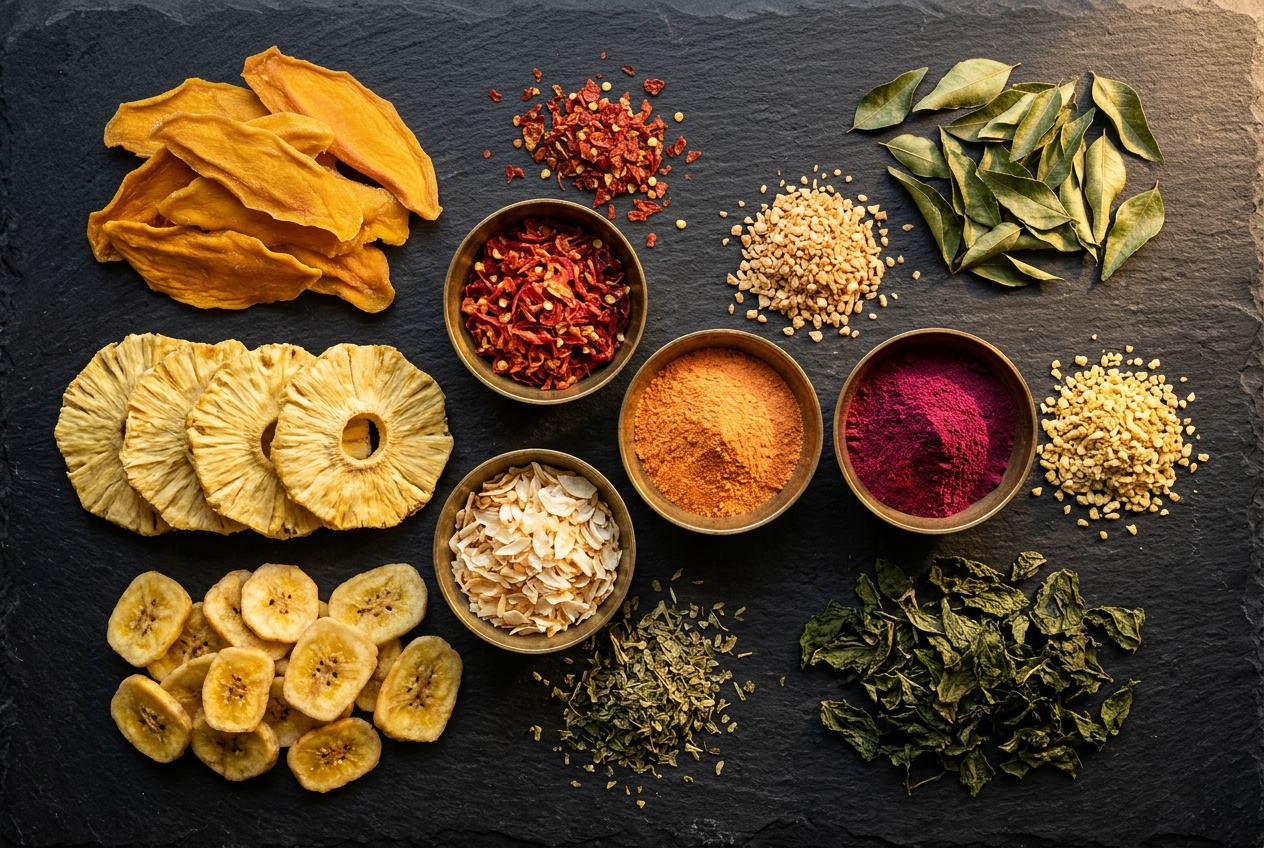
Dehydrated vegetables let a factory carry “real vegetable” claims without cold-chain, trimming waste or seasonal price swings. But a flake that rehydrates beautifully in a soup can fail completely in a dry seasoning, so the specification — not the vegetable — is the product.
Start with the application
- Instant soups and noodles: small flakes or granules that rehydrate in 2–3 minutes.
- Ready-to-cook mixes: larger pieces that hold shape through cooking.
- Seasonings and rubs: granules or powders with low moisture to stay free-flowing.
- Toppings: visible flakes with strong colour.
Specify these five things
- Vegetable and part (e.g. tomato flakes with or without skin and seeds).
- Piece size or mesh range.
- Moisture target and acceptable range.
- Colour reference — a retained sample beats a description.
- Allergen and segregation requirements — ask how the plant separates runs.
Ask about the drying method
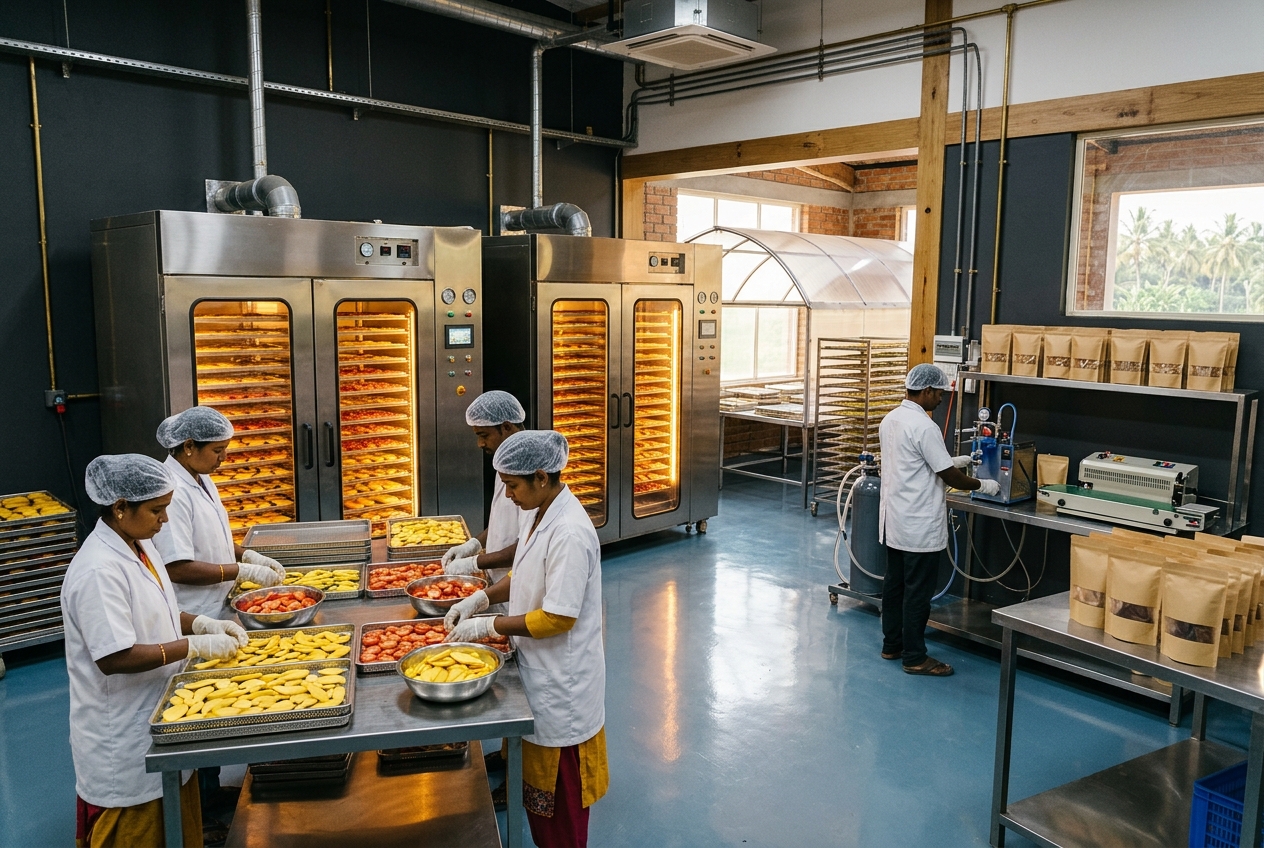
High-heat drying is fast but browns onion and dulls tomato. Low-temperature infrared and solar-assisted drying — the approach in our plant — is slower and gentler, keeping colour and aroma, which is why it suits visible flakes and powders.
Run a trial batch
Before committing to monthly volumes, run a trial: your raw-material spec, our cut and drying profile, your application test. We share yield, moisture and particle-size data for every trial, then lock a specification sheet.
Rare Locals currently supplies dehydrated vegetables to business customers only — they are not sold as retail packs — and offers contract dehydration for growers and brands with their own produce.